Pets and cleaner air

Air purifiers for homes with cats, dogs and a lot of floating fur

People with pets usually know the moment a room starts to feel different. You see hair in the corners. The sofa collects that fine dusty layer again. Sometimes the room smells a bit heavier than it should, even when the place is clean.

An air purifier will not replace vacuuming, washing blankets or grooming. But in a pet home it can still help a lot. It can reduce airborne particles, catch some of the stuff that keeps floating around after a dog shakes off or a cat claims the couch for the fifth time that day.

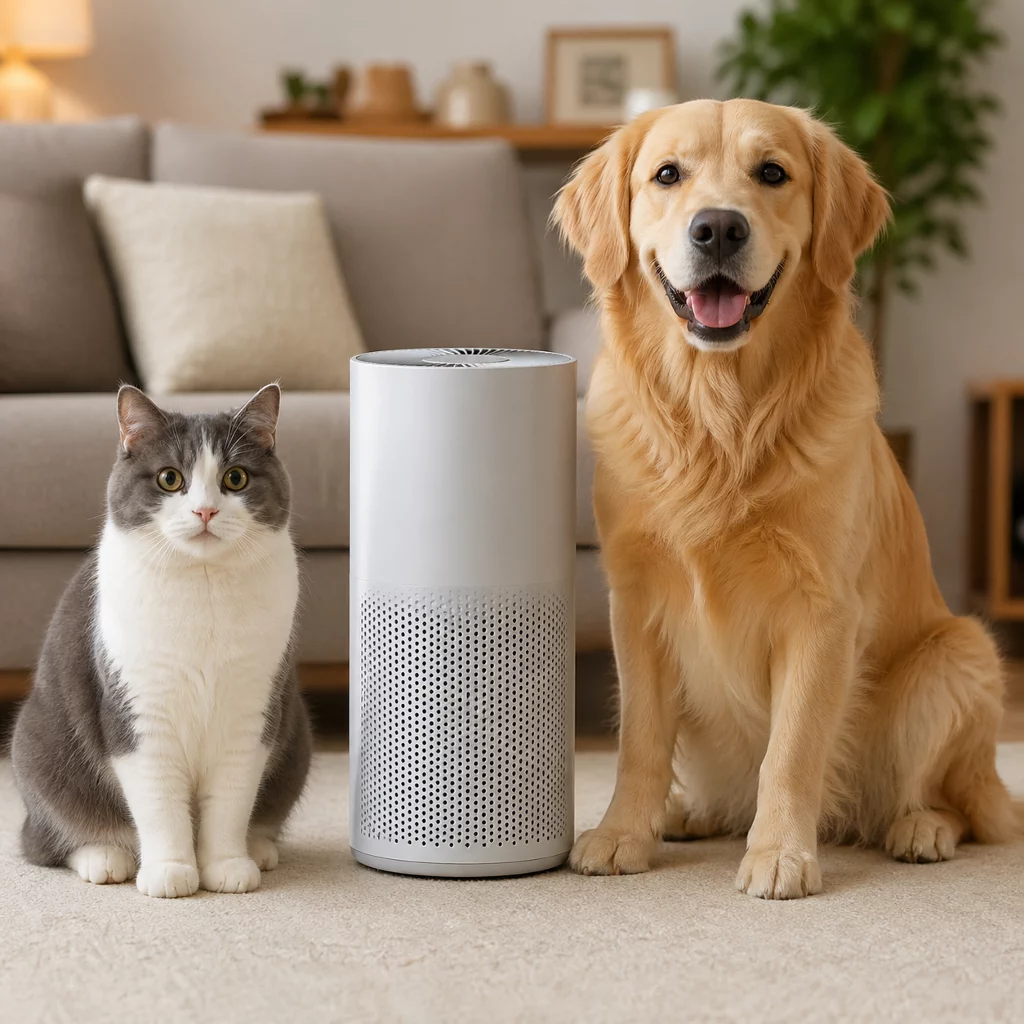
Bright home interior with an air purifier next to a dog and a cat
What this page covers Pet dander, hair, odors, filter basics, placement tips and what air purifiers can realistically do in homes with cats and dogs.

It is not just hair on the floor

When people say they are reacting to pet hair, that is often not the full story. The bigger issue is usually the proteins found in pet dander, saliva and urine. Hair and fur can carry those allergens around the room and help spread them onto furniture, fabric and bedding. Cat and dog allergens can also stay airborne and then settle again later.

That is why pet homes can feel dusty even when they are not exactly dirty. Soft furniture grabs particles. Blankets hold onto them. Clothing moves them from room to room. If a pet spends time on the bed or sofa, the room air usually reflects that pretty quickly.

It is also worth saying clearly: even people who are not allergic can still want cleaner air in a pet home. Fur, fine particles and odor build-up are just part of everyday life with animals. An air purifier is often about comfort as much as allergies.

It works best on the stuff that stays in the air

This is the useful part to understand before buying anything.

Dander and fine airborne particles

Portable air cleaners with mechanical filtration are made for particles in the air. HEPA filters are commonly used for this and are designed to capture very small particles efficiently. That includes the kind of airborne material that tends to build up in homes with pets.

Fur that keeps drifting around

Big clumps of hair usually need a vacuum, not a purifier. But loose fluff and lighter fur that keeps moving through the room can still get pulled in, especially when the purifier runs often and has a decent pre-filter. In real life that helps a room feel less dusty.

Pet smell and stale room air

Odor is different from dander. For that, the carbon part of the filter matters. A purifier with particle filtration plus activated carbon can help reduce that heavy pet-room smell, though it will not replace airing out the room or washing pet fabrics.

An air purifier helps, but it does not clean the whole lifestyle around the pet

This part matters because people sometimes expect too much. Air purifiers do not pick fur off the sofa, wash the dog blanket, scrub the floor or stop a cat from sleeping on your pillow. They only work on what reaches the air and passes through the filter.

That means the best results usually come from a combination of things: regular vacuuming, washing pet beds and throws, brushing pets when it makes sense, and keeping airflow clear around the purifier. The EPA also notes that portable air cleaners can reduce indoor air pollution, but they cannot remove all pollutants from the air.

So the honest version is this: a purifier is a support tool. In a pet home, that is still valuable. It just should not be treated like the only fix.

Placement matters more than people think

A purifier works better when it is placed where the air actually moves and where the pet life really happens.

Living room placement

If the dog naps in the living room all day or the cat owns the sofa, that is usually where the first purifier should go. It is the room with the most suspended hair, disturbed dust and fabric surfaces collecting allergens.

Bedroom placement

If someone in the home reacts to pets, the bedroom can matter even more. Pet allergens are tiny and can stick to clothing, bedding and upholstered furniture. Keeping sleeping air cleaner can be one of the more noticeable changes in day-to-day comfort.

A common mistake is putting the purifier in a hallway because it feels out of the way. That usually looks tidy, but it is not where the problem is. Put it where the fur, dander and odor are most obvious.

Pet homes are harder on filters

If there is one thing pet owners notice fast, it is that filters age differently in a shedding home. A washable or easy-to-clean pre-filter is useful because larger fur and lint can build up early. That helps protect the deeper filter layers and keeps airflow from dropping too quickly.

Mechanical filters such as HEPA are good at capturing airborne particles, but they still need normal maintenance. The EPA recommends choosing a portable air cleaner sized for the room and paying attention to actual air cleaning performance, not just the general product category.

In plain terms, a pet home usually needs a bit more filter attention. If the purifier starts sounding strained, if airflow drops, or if the pre-filter looks packed with fluff, it is time to clean or replace what the model requires.

Why some homes need cleaner air even when the floor looks clean

Pet allergy is usually triggered by proteins found in skin cells, saliva and urine, not by fur itself. Dander is especially annoying because it is very small, can stay airborne for a long time, and collects easily in upholstered furniture and on clothing.

That is also why one quick clean-up often does not solve the whole issue. You can vacuum the room and still have allergen particles in the air, in the couch, on the curtain or on the blanket the dog likes. Air cleaning helps most when it runs consistently and is paired with ordinary cleaning habits.

AAFA notes that air cleaners can be part of controlling indoor allergens, and the EPA points out that portable air cleaners are designed for a single room or area rather than the whole house. That is a useful way to think about pet setup too - choose the room that matters most first.

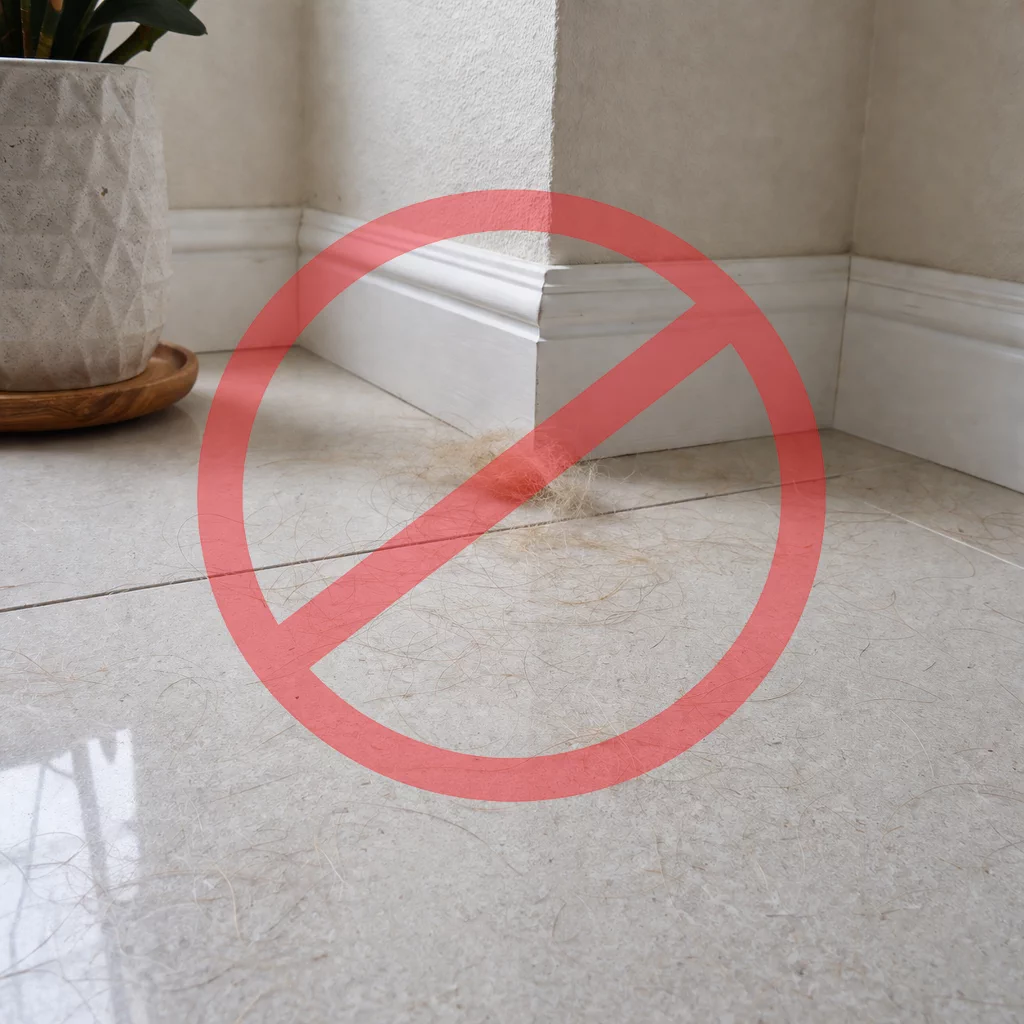
Corner of a room with visible pet hair, dust and fabric build-up

What people usually want less of

  • Floating fur after grooming or play
  • Fine dusty build-up near pet beds and corners
  • Heavy smell in rooms with blankets and fabric furniture
  • Air that feels stuffy by the end of the day
  • More irritation during allergy season