Fine dust, traffic and urban air

Air purifiers for homes affected by traffic, fine dust and small airborne particles

Some homes just get that dusty feeling faster than others. You wipe a surface, open a window, and by evening the room already feels a bit loaded again. If you live near a road, in a dense urban area, or even in a quieter place where wood heating is common in winter, that is not your imagination.

Fine particles are one of the reasons people start looking at air purifiers. You cannot see most of them, but they are still there in the air. A good purifier can help reduce the airborne part inside the room, which is often the bit that keeps circulating around you while you work, relax or sleep.

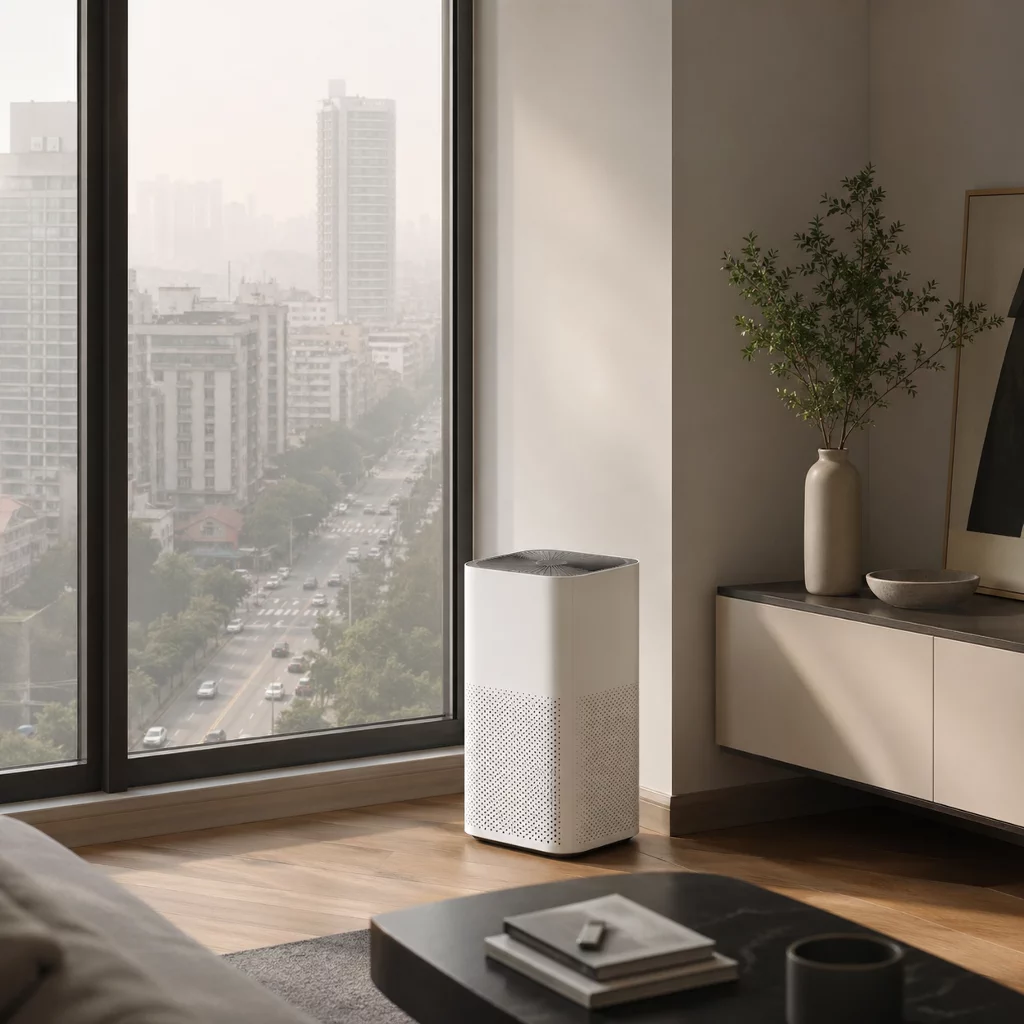
Modern apartment interior with an air purifier near a window overlooking an urban street
What this page covers Fine particulate matter, traffic-related dust, wood smoke, indoor exposure and how air purifiers can help reduce airborne particles in a room.

Not all dust is the same, and the smaller stuff is the part people worry about most

When people say "fine dust", they usually mean very small airborne particles. You will often see terms like PM10 or PM2.5. PM2.5 means particulate matter with a diameter of 2.5 micrometers or less. That is tiny. Small enough that it does not behave like normal visible dust on a shelf.

These particles can stay in the air for longer and move through a room more easily. That is why a place can look clean and still not feel especially fresh. The air may still contain suspended particles from outdoors, from nearby combustion, or from what is happening inside the home.

Most people do not think about particle size in daily life. They just notice the room feels heavy, dusty or stale more often than it should.

City traffic is one source, but it is not the only one

This is one reason the topic catches people by surprise.

Urban roads and traffic

Busy roads bring a mix of pollution into the picture. Part of it comes directly from exhaust, and part of it comes from general road traffic and particles already present in outdoor air. If your windows face a road, a junction or a busy street canyon, indoor air can be affected pretty quickly after airing out.

Wood heating and smoke

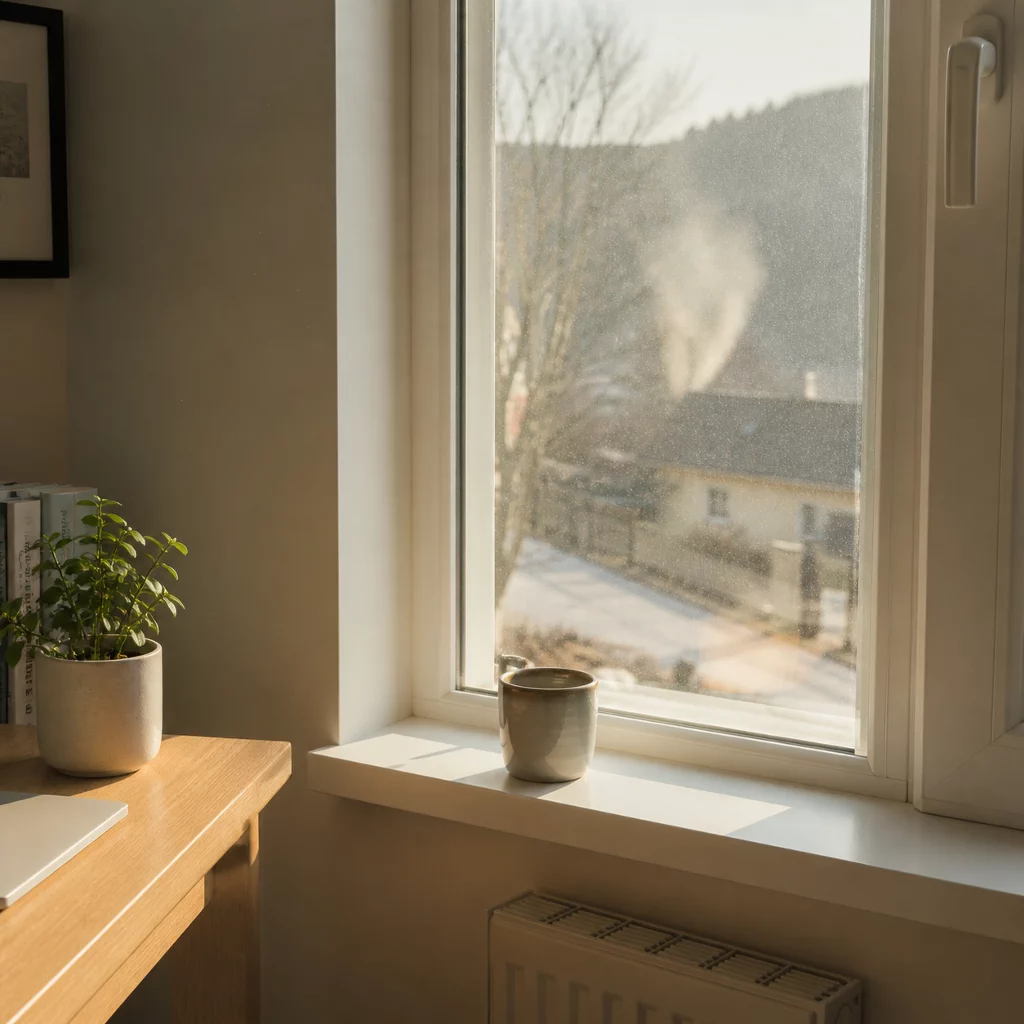
This is not just a city problem. In suburban and rural areas, wood heating can be a real source of fine particulate pollution too. On cold evenings, smoke from nearby wood stoves or heaters can add a noticeable layer to the air indoors, especially if the neighborhood is calm and the smoke lingers.

Everyday indoor build-up

Outdoor particles do not arrive alone. They mix with whatever is already in the home. Cooking, general dust, fabric fibers and settled particles getting stirred up again all add to the feeling that the room never really clears out.

It reduces the airborne part inside the room

A portable air purifier works by pulling room air through a filter and sending cleaner air back out. If the machine uses proper particle filtration and has enough airflow for the room, it can reduce the amount of fine airborne material that keeps circulating indoors.

That is the key point here. The purifier is not cleaning the whole outdoor environment. It is cleaning the air in the room where you put it. In practice, that can still matter a lot. Especially in bedrooms, home offices and living rooms where you spend hours at a time.

This is also why people often notice the biggest difference when the purifier runs steadily rather than only being switched on once the room already feels unpleasant. Particle control tends to work better as a continuous habit than as a rescue move.

Put it where the air problem actually shows up

This sounds obvious, but people still get it wrong all the time.

Bedrooms and sleep spaces

Bedrooms are often the first place worth protecting because you spend long stretches there with the door closed. If the outside air is not great, keeping that room filtered through the night can make more sense than putting the purifier in a hallway no one really uses.

Home office or living room

If you work near a road-facing window or sit in one room most of the day, that room usually deserves priority. A purifier in the right room can do more than one placed somewhere convenient but irrelevant.

The simple rule is this: choose the room where you breathe the air the longest, not the room where the purifier is easiest to hide.

Fine particle problems are not only for city centers

People often picture traffic when they think about dirty air, but winter wood smoke can be just as relevant in some neighborhoods. If several homes nearby use wood heating, the evening air can feel heavier fast. That smoke is made up of gases and fine particles, and those particles can move indoors.

This is one reason some homes in quieter suburban streets still benefit from air purification. The air may look peaceful outside, but the actual particle load can still be higher than you would expect on cold, still days.

So if your place smells smoky after sunset, or the indoor air seems thicker in winter even without much traffic around, fine particulate matter may still be part of the story.

A purifier helps with room air. It does not solve the whole environment outside.

This is the realistic part. An air purifier can reduce airborne particles in the room where it runs. It cannot stop outdoor pollution from existing, and it cannot remove every pollutant from the air.

It also does not replace ordinary habits that make a difference indoors. Keeping windows closed during obviously bad air periods, cleaning settled dust, changing filters on time and thinking a bit about when you air out the room all still matter.

The honest goal is not perfection. It is better indoor air in the space you actually live in. For a lot of people near roads, in urban apartments, or in neighborhoods with wood heating, that is already a worthwhile improvement.

Window-side interior with visible fine dust and an urban road outside

What people usually want less of

  • That loaded feeling after opening road-side windows
  • Fine dust returning to surfaces too quickly
  • Heavier indoor air on cold smoky evenings
  • Particles drifting through bedroom or office spaces
  • Rooms that never feel fully fresh