Family, children and indoor air

Air purifiers for families, babies and calmer everyday air at home

Family homes collect a lot of life in the air. Cooking, dust, open windows, shoes from outside, laundry, soft furniture, a stroller in the hallway, and sometimes a baby room that you suddenly look at much more closely than before.

A lot of parents start thinking about air quality once there is a baby in the house, or once they notice a child spends a lot of time in one room that feels stuffy, dusty or just not that fresh. An air purifier will not solve every indoor air issue, but it can help reduce airborne particles in the room where your family actually lives.

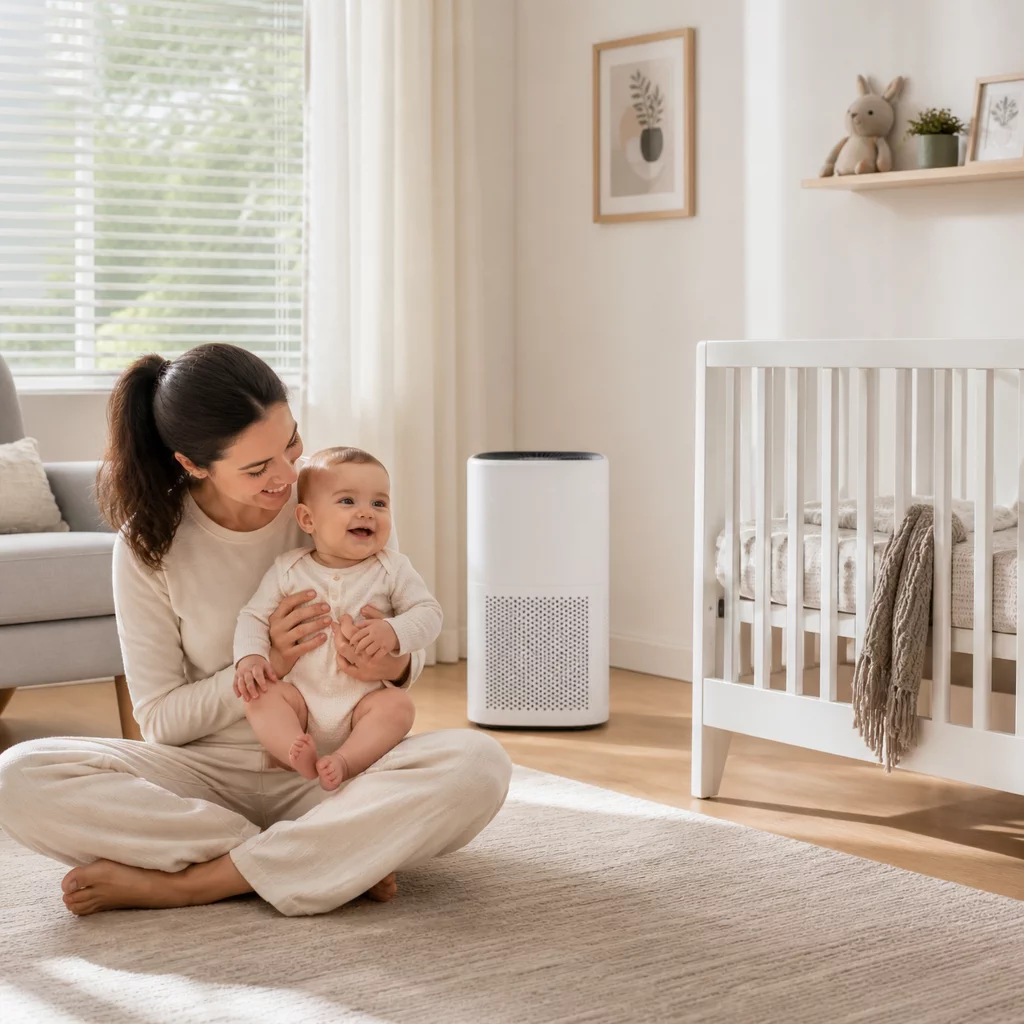
Bright family room or nursery with a baby crib and a modern white air purifier
What this page covers Family homes, nurseries, bedrooms, airborne particles, quieter operation and realistic ways an air purifier can support cleaner indoor air.

When there is a baby or child at home, people look at the room differently

Before kids, most people notice indoor air only when something smells off or a room feels stale. With a baby or small child, the attention shifts a bit. You start noticing dust faster. You think more about the nursery, the bedroom, the living room rug, and whether the air feels heavy by the end of the day.

That does not mean every family needs a purifier. But it does explain why so many people start looking into one. Family life creates particles indoors, and family homes often have a lot of fabric, movement and shared air in a relatively small number of rooms.

It is not only about babies either. Some homes also include grandparents or family members who are more sensitive to poor air quality in general. Cleaner indoor air can simply make a shared home feel more comfortable.

Young children are not just smaller adults

This is one of the reasons the topic comes up so often for families.

They can be more sensitive

Children can be more vulnerable to environmental exposures than adults, and they breathe more air in proportion to body weight. That does not mean every room is dangerous. It just means indoor air quality is worth taking seriously in spaces where children spend a lot of time.

They spend a lot of time indoors

Nurseries, bedrooms, play areas and living rooms are where family life happens. Babies nap there, toddlers crawl there, school kids play there. If the air in those rooms feels stale or loaded with particles, that becomes part of daily life pretty quickly.

Homes collect more than people expect

Indoor particles can come from outdoor dust, cooking, fabrics, smoke, pets, cleaning activity and just normal movement through the house. You do not have to live in a visibly dirty home for that to matter.

It helps with the part of the problem that stays in the air

A portable air purifier pulls room air through a filter and sends cleaner air back into the room. If it uses proper particle filtration, it can reduce airborne particles that are moving through that space. That is the main reason families use them.

In a nursery or family bedroom, that can mean less airborne dust and fine particulate material staying in circulation. In a living room, it can help when the room gets stuffy from daily use or collects particles from outside air, soft furniture or general family traffic through the home.

The key point is that a purifier works on room air. It is most useful when it runs steadily in the room you care about most. It is not a whole-house solution by default, and it is not a substitute for reducing obvious pollution sources.

Start with the room your family actually uses the most

It does not need to be complicated.

Nursery or bedroom

Bedrooms are often the first choice because the room is used for long, quiet stretches. If a baby naps there or the family sleeps there every night, the purifier has time to keep cycling the same room air through the filter.

Living room or family space

If your household spends most of the day in one main room, that may be the better place to start. It is usually the room with the most movement, soft furniture and daily particle build-up from normal family life.

A purifier hidden in a hallway may keep the floor plan tidy, but it usually does less than one placed in the room where your child naps, plays or sleeps.

Quiet, safe placement and easy upkeep matter more than people think

Family use is not only about filtration. Noise matters too. A purifier that sounds fine in a kitchen may feel too loud in a nursery at night. That is why quieter lower modes are often more important for family homes than raw top-speed performance.

Placement matters for safety and airflow. Put the unit where it cannot be tipped easily, keep cords tidy, and do not block the intake with curtains, toys or furniture. It also helps to keep it a bit away from the crib or bed rather than right next to it.

Filter maintenance is the other thing to keep simple. If replacing filters becomes annoying, people delay it. For family use, convenience is part of whether the purifier actually stays useful over time.

It helps with indoor particles, but it does not replace the basics

This part is worth being clear about. An air purifier can reduce airborne particles in a room, but it cannot remove all indoor pollutants and it cannot fix every air-quality problem in a home.

If there is cigarette smoke indoors, dampness, mold, an unvented appliance, or a strong pollution source in the room, those issues still need to be addressed directly. Pediatric guidance also puts source control first - reduce or remove the source where possible, then improve ventilation and air cleaning around it.

So the realistic family use case is this: a purifier is a helpful support tool. It can make a nursery, bedroom or family room cleaner in terms of airborne particles. It is not magic, but in a lot of homes it is a sensible addition.

Overhead view of a baby sleeping peacefully in a crib, wearing a knit cap and tucked under a blanket, with soft blue waves suggesting clean air.

Why families often like having one

  • Cleaner room air where children sleep or play
  • Helpful support for dusty or stuffy rooms
  • Useful in homes with lots of daily indoor activity
  • Quiet operation can suit bedrooms and nurseries
  • Simple long-term comfort for shared spaces